Posts

Showing posts with the label #SpaceScience

Massive Star Deaths Create Gravitational Ripples Across the Universe

Image
A new study has uncovered that the explosive deaths of massive , spinning stars can send gravitational waves rippling across the universe , detectable right here on Earth. These stellar explosions, known as collapsars , occur when stars 15-20 times the mass of the Sun exhaust their nuclear fuel, collapsing inwards and forming black holes . After the death of a massive, spinning star, a disk of material forms around the central black hole. As the material cools and falls into the black hole, new research suggests that detectable gravitational waves are created. Credit: Ore Gottlieb. The intense implosion and subsequent explosion leave behind a swirling disc of matter around the black hole, which distorts space and generates powerful gravitational waves. These waves, traveling across the cosmos, have the potential to be detected by instruments like the Laser Interferometer Gravitational-Wave Observatory (LIGO) , which first observed such waves in 2015. LIGO Lead researcher Ore Gottlie...
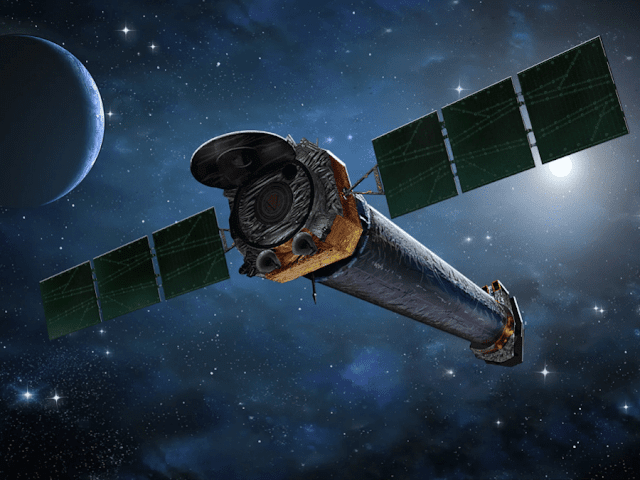
Astronomers Rally to Save NASA's Chandra X-ray Observatory Amid Budget Cuts

Image
 In a dramatic bid to save one of NASA 's most productive space observatories, astronomers across the globe are uniting to prevent the shutdown of the Chandra X-ray Observatory . Launched in 1999 , Chandra has revolutionized our understanding of the universe by providing stunning insights into black holes , stellar explosions , and other cosmic wonders . Despite being fully operational with a decade of fuel left, NASA's budget shortfalls have placed the telescope on the chopping block. An artist's impression of the Chandra X-ray Observatory. Credit: NASA/CXC & J. Vaughan This decision has sparked worldwide protests under the #SaveChandra movement, with scientists warning that shutting down such a technologically advanced telescope would leave an irreplaceable gap in X-ray astronomy. Chandra's unique ability to provide high-resolution images of distant cosmic phenomena remains unmatched by any existing or upcoming projects from Europe or China. NASA released this c...

"Liquid Water Found on Mars: A New Hope for Life Beneath the Red Planet's Surface!"

Image
  Nearly two years after NASA 's InSight Lander mission ended, scientists are still making groundbreaking discoveries from its data. The latest finding? A massive underground reservoir of liquid water on Mars ! This water lies deep beneath the surface, between 11.5 and 20 km , but it provides the best evidence that Mars still has liquid water in addition to its frozen poles . Representation of water (Credit:- AI) This astonishing discovery opens up new possibilities for the Red Planet's past climate and its potential to sustain life! While drilling to this depth would be a challenge for future human expeditions, the presence of water gives scientists new hope. Water is essential for life as we know it, and now we know Mars has plenty—hidden beneath its surface. Seismic data from InSight hints at a vast reservoir of groundwater that could theoretically host life, much like the deep mines and ocean floors on Earth do. Could Mars have the conditions to support life? While no l...

"Webb Space Telescope Unveils Key Insights on Universe's Expansion Rate – Is the Hubble Tension Real?"

Image
  The mystery behind the universe's expansion rate may finally be solved , thanks to new data from NASA's James Webb Space Telescope . For over two decades, astronomers have debated the " Hubble constant ," a value essential to understanding how fast the universe is expanding. This debate, known as the " Hubble tension ," had two conflicting measurements, suggesting that something might be missing from our universe model. Scientists used new data taken by the James Webb Space Telescope to make a  However, a recent study led by renowned cosmologist Wendy Freedman of the University of Chicago indicates that there may not be a conflict after all. Freedman and her team used the Webb Telescope to measure the distance to ten nearby galaxies, finding that the expansion rate was about 70 kilometers per second per megaparsec, aligning closely with previous methods. An artist's concept showing the expansion of the universe over time since the Big Bang By using th...

"Mystery Unveiled: Plasma Bubbles Powering Fast Radio Bursts Finally Confirmed!"

Image
  Astrophysicists have made a groundbreaking discovery that brings us closer to understanding one of the universe's most mysterious phenomena— Fast Radio Bursts (FRBs) . A new study by the Italian National Institute for Astrophysics (INAF) has confirmed that plasma bubbles are responsible for the persistent radio emissions linked to these powerful cosmic events. An artistic representation of a magnetar, surrounded by the nebula responsible for..... FRBs, which release immense energy within milliseconds, have puzzled scientists since their discovery a little over a decade ago. This latest research focused on FRB20201124A, located 1.3 billion light-years away, and uncovered that a plasma bubble surrounding a magnetar or high-accretion X-ray binary is the source of the persistent radio signals. Using the world's most sensitive radio telescope, the Very Large Array (VLA) in the USA, scientists were able to measure the weakest persistent emission ever detected for an FRB. This fi...

Galactic Symphony: Pulsar Timing Arrays Detect Long-Period Gravitational Waves

Image
  Astrophysicists have made a groundbreaking discovery by detecting long-period gravitational waves using data from 68 pulsars . This significant finding, reported by NANOGrav , aligns with predictions of general relativity and provides new insights into supermassive black holes and galaxy mergers. Artist’s interpretation of an array of pulsars being affected by gravitational ripples produced by a supermassive black hole binary in a distant galaxy. Credit: Aurore Simonnet for the NANOGrav Collaboration Using large radio telescopes, researchers observed cosmic clocks to find evidence for gravitational waves oscillating over years to decades. This continuous signal followed over 15 years, transforms our sector of the Milky Way into a vast gravitational-wave detector. Pulsars, the ultra-dense remnants of massive stars, serve as precise cosmic timepieces. By monitoring 68 pulsars with facilities like Arecibo Observatory and Green Bank Telescope, NANOGrav has shown the first evidence f...

Dark Matter Revealed: Galaxy Cluster Collision Unveils Astonishing Speeds

Image
  Astronomers have made groundbreaking discoveries in studying dark matter by observing a unique collision between two galaxy clusters . This monumental event showcases the separation of dark matter from ordinary matter, offering new insights into the mysterious nature of dark matter and setting the stage for future research. This artist’s concept shows what happened when two massive clusters of galaxies, collectively known as MACS J0018.5, collided: The dark matter in the galaxy clusters (blue) sailed ahead of the associated clouds of hot gas, or normal matter (orange). Both dark matter and normal matter feel the pull of gravity, but only the normal matter experiences additional effects like shocks and turbulence that slow it down during collisions. Credit: W.M. Keck Observatory/Adam Makarenko Key Findings Collision of Galaxy Clusters: Astronomers observed the collision between two massive clusters, MACS J0018.5+1626, revealing that dark matter and ordinary matter decouple dur...

JWST's Unexpected Find: Coldest and Oldest Super-Jupiter Discovered!

Image
 Astronomers using the James Webb Space Telescope (JWST) have made an incredible discovery: a massive exoplanet , six times the size of Jupiter , lurking just 12 light-years from Earth. Named Epsilon Indi Ab , this gas giant is the coldest and oldest exoplanet ever directly imaged. JWST directly imaged the gas giant planet Epsilon Indi Ab by blocking out the light from its host star (located where the white star symbol is placed). Credit: ESA/Webb, NASA, CSA, STScI, E. Matthews (Max Planck Institute for Astronomy) The surprise find came after a case of cosmic mistaken identity, as astronomers initially believed they were observing a different planet. Instead, they uncovered Epsilon Indi Ab, which orbits its star at a distance of 28 astronomical units (AU) – a whopping threefold increase from the initially thought nine AU. Epsilon Indi Ab orbits an orange dwarf star named Epsilon Indi A, part of a fascinating binary system with a brown dwarf. This unique setup makes it an exciti...

Webb Telescope Detects Rotten Eggs Smell on Nearby Exoplanet

Image
 The JWST (James Webb Space Telescope) has made a groundbreaking discovery by detecting the smell of rotten eggs on a nearby exoplanet, HD 189733. This "hot Jupiter," located just 13 times closer to its host star than Mercury, reveals an atmosphere filled with hydrogen sulfide, a compound responsible for the rotten odor. The JWST's spectral analysis identified hydrogen sulfide and various other sulfur compounds. These findings are significant as sulfur is considered a building block of life, making it a prime target in the searching for habitable place. Despite its sterile conditions, temperatures soaring above 900°C, and 8,000 kph winds, HD 189733 offers valuable insights into exoplanet atmospheres. The study, led by Guangwei Fu of John Hopkins University, highlighted the absence of methane in HD 189733's atmosphere, contrary to previous reports. Additionally, the exoplanet was found to have metals in its atmosphere, similar to stars. The JWST continues to be a power...

"NASA's Webb Unveils Stunning Celestial Fireworks: A Star is Born!"

Image
  In an awe-inspiring display of cosmic artistry, NASA's James Webb Space Telescope(JWST) has captured a mesmerizing image of celestial fireworks surrounding a forming star. This dazzling scene, imaged by Webb's Mid-Infrared Instrument (MIRI) , showcases a fiery hourglass shape that marks the birth of a very young protostar. The protostar within the dark cloud L1527, shown in this image from NASA’s James Webb Space Telescope Near-Infrared Camera (NIRCam), is embedded within a cloud of material feeding its growth. Ejections from the star have cleared out cavities above and below it, whose boundaries glow orange and blue in this infrared view. The upper central region displays bubble-like shapes due to stellar “burps,” or sporadic ejections. Credits: NASA, ESA, CSA, and STScI. Image processing: J. DePasquale, A. Pagan, and A. Koekemoer (STScI) A Glimpse into the Cosmos The vibrant colors within this mid-infrared image reveal intricate details about the central protostar's ...

Soar through the Pillars of Creation: NASA's Mesmerizing New Video

Image
  NASA has unveiled a breathtaking new video that takes viewers on a 3D journey through the iconic Pillars of Creation . This mesmerizing animation results from a groundbreaking collaboration between NASA's most powerful space telescopes— the Hubble Space Telescope and JWST (the James Webb Space Telescope) . The Pillars of Creation as seen by the Hubble Space Telescope and the James Webb Space Telescope. Credit: Greg Bacon, Ralf Crawford, Joseph DePasquale, Leah Hustak, Christian Nieves, Joseph Olmsted, Alyssa Pagan, and Frank Summers (STScI), NASA's Universe of Learnin A Historic Collaboration The Pillars of Creation, located 6,500 light-years away in the Eagle Nebula (M16), have fascinated researchers and the public since Hubble first captured their image in 1995. Now, with the combined efforts of Hubble and JWST, the star-forming clouds are brought to life in stunning detail. This animation is not just an artistic interpretation but is based on observational data led by...

Voyager 1: The Distant Explorer is Back in Action

Image
  NASA's Voyager 1, the most distant spacecraft from Earth, is again sending back scientific data after resolving a computer issue. This remarkable comeback has rekindled excitement about the spacecraft's ongoing mission in interstellar space. Science Resumes on Voyager 1 Voyager 1's four main instruments, offline since a computer malfunction in November, are operational. The Jet Propulsion Laboratory (JPL) announced that meaningful data transmission resumed in April, and the spacecraft has recently been commanded to continue its study of the interstellar environment. A Journey Through Space Launched in 1977, Voyager 1 has journeyed over 15 billion miles (24.14 billion kilometers) from Earth. Its twin, Voyager 2, is also exploring interstellar space, currently more than 12 billion miles (19.31 billion kilometers) away. Voyager 1's mission has provided groundbreaking discoveries, including a thin ring around Jupiter and several moons of Saturn. Overcoming Challenges The...